




Natalie Rozvezeva

Interview with
Netherlands
Photography / Performance / Visual Arts

Working across photography, assemblage, mixed media, painting, and movement, Natalie Rozvezeva has developed a multidisciplinary artistic practice shaped by observation, physical awareness, and psychological depth. Based in Amsterdam, she explores themes of transition, vulnerability, inner tension, and the human longing to reconnect with the wildness of nature.
Her artistic journey began with street and travel photography before expanding into portraiture, reportage, and still life. Drawing on her background in acrobatics, Rozvezeva creates images that reveal a remarkable sensitivity to movement, balance, and the expressive language of the human body.
Her work has been exhibited internationally in galleries across Europe and the United States and featured in several international art publications. Recognized with multiple international awards, her work continues to gain attention for its poetic visual language and its thoughtful exploration of the human condition.


"My work explores the delicate threshold where perception begins to shift. Rather than documenting reality, I seek to create visual experiences that question certainty and invite multiple layers of interpretation. Photography, assemblage, painting, and mixed media provide me with the freedom to construct images that move between observation and imagination, familiarity and ambiguity.
I am fascinated by the quiet tension that arises when recognizable objects or situations are subtly displaced. Small disruptions within an otherwise familiar scene encourage the viewer to pause, reconsider, and engage with the image beyond its immediate appearance.
Through symbolic contrasts, layered compositions, and an intuitive balance between control and spontaneity, I create spaces that remain intentionally open. My hope is not to provide answers, but to awaken curiosity, encourage reflection, and invite viewers to discover their own narratives within the work."
Natalie Rozvezeva
-%20Chapter%203%20%E2%80%93%20No%206%20-%20Kopie.jpg)
Your practice moves between photography, painting, assemblage, mixed media, and acrobatics. What first awakened your need to express yourself through several disciplines rather than one single medium?
It would be impossible to remember when it started, because since early childhood I was creating things by any means that I encountered on the way - coming up with stories in my head non-stop, dancing, making clay sculptures, making up my own songs, drawing a lot, building gorgeous houses from a big box of buttons at my grandma’s house (and yes, as with all grandma houses in the whole world, a stash of buttons and sewing supplies was inside a round blue tin “danish” butter cookie box).

How did your journey into acrobatics begin, and what did this physical discipline teach you about balance, control, vulnerability, and trust?
At some point I accidentally noticed people going to aerials silks class in my sports school and got curious. As soon as I tried it, I fell in love. So far, silks are my favorite discipline, although I occasionally do aerial hoop and tried straps and pole acrobatics. It did teach me a lot about myself. I am eternally grateful to teachers that were supportive, gentle and sincerely caring about each student through their each struggle. There is a lot of fighting with yourself going on on this journey. When I learn a new trick, at first I crash into a limitation of my physical ability - no, I can not hold myself in the air on one arm, no, I can’t push my body to turn into this position into the silk, no, it is too scary to climb that high and do a drop from there and so on - but through small steps, multiple attempts and ton of help (sometimes a teacher lifts or holds a student with their own hands to help get into a new position in the air) - it slowly starts to improve, little elements of the trick work, then multiple elements in progression work, then I gain more confidence in myself and finally (maybe in 1 lesson or in several lessons) - I am able to perform a trick. And I get overwhelmed with happiness, pride and confidence. This is a fantastic feeling. Then, of course, there are moments when it is the right thing to give up. To stop pushing for today, because if I climb up when I am out of energy or too distressed, I may hurt myself. Give yourself time, rest, recharge and try another time with a fresh mind. Control is interesting - yes, it is important to totally control what do up there, there are no random movements, but then comes a moment when you need to let go of your hands and do a fall, a drop, and trust the process, trust that you did everything right to prepare a trick and trust that you will be able to catch yourself at the end of the drop.


When you photograph acrobats, you are observing a world you also know from within. How do you move between being part of that world and looking at it from the outside as an artist?
Some things don’t change regardless if I am doing acrobatics or taking pictures of it - for example, my admiration and passion for the beauty, elegance and empowerment that this sport brings into every person. To me, it is all the same universe, no matter if I am looking at it or doing it.
Does your own experience as an acrobat allow you to recognize moments of tension, concentration, or fragility that might remain invisible to others?
Oh yes, absolutely. I can experience it as if with my own body, when they feel pain, tension, fear, triumph. When I take a picture I feel as if I am at the same time inside that body that I am framing. And then I have the unique power to turn that moment into a photograph and be able to share my excitement with others - doesn’t that look stunning? isn’t it breathtaking?
Your work often deals with transitional states. Are these states mainly psychological, physical, emotional, or do they exist somewhere between the body and the mind?
Good question. I think I experience the world around me as a liquid, everchanging reality. And the key to that metamorphosis is in people’s minds. We only know our perception of the world, we can’t experience a fully “objective” state of things. So, when a person is depressed, a hot and sunny day seems like a burning cage wrapped around the body. When a person is in love, a tiny wild flower seems like a beautiful hymn to the power of life.
%20-%202%20Acrobatic%20performance%20on%20a%20moon%20at%20fundraising%20even%20f.jpg)

How do photography and acrobatics meet in your artistic vision? Do you see the camera as a way of holding movement, or as a way of transforming it into another kind of language?
Well, of course, it does hold a moment, allowing us to study carefully an image that we would normally observe for a fraction of a second or a few seconds max. But the main goal is transforming this event of the physical world into an object of visual art, with its own self-contained narrative. It’s not needed to be there in person and see the acrobatics performance, it is enough to look at one image and read from it the mood, the story, the action itself.
You also work with painting, assemblage, and mixed media. What can these forms express that photography alone cannot?
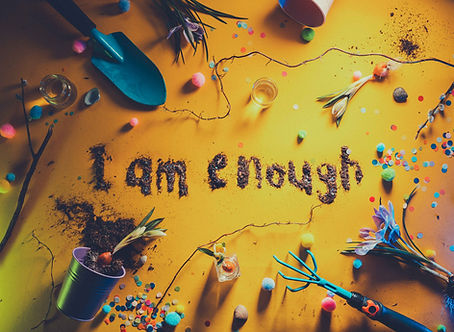
Photography is a beautiful medium, but I start to feel too much “contained in the box” sometimes. There can be no limits in creativity, the more free our mind is, the better we will express that intangible state that we are trying to express. Also, nowadays, handmade and slow is a new luxury. Fast production and fast consumption make their way into art and all other areas of life. As my form of resistance, I gravitate more and more towards building my ideas as mixed-media objects and sets with my hands to then photograph them as-is. I barely rely on anything in post-processing, only increasing contrasts and color nuances here and there.


Across your different media, what are the recurring elements that connect your practice — movement, color, narrative, the body, the absurd, or something deeper?
Yes, I noticed that I often navigate towards bright (sometimes neon) colors, low-key approach and integrating an illogical, even an absurd twist into the story. And, of course, a few recurring topics unite my work across any medium - mental health and trauma, human connection to nature, mythology
Your images often include an unexpected or surreal twist. What interests you about disrupting familiar reality?
It is a fun game to always look at reality through the prism of “possibility of impossible things”. There is a lamp on the table, but what if this was a mountain? Who would climb it? My imagination has been working like this since I was very little and it never went away. This keeps the mind open, flexible, more adaptive and as a result more tolerant and more peaceful, actually.
Mental health and inner struggle appear as important themes in your statement. How do you approach these subjects without illustrating them too literally?
I come from my own state. When I am going through a rough period or, to the contrary, have found an insight that helps to relieve my inner pain, I capture my emotions through symbols and associations, shapes, colors, and atmosphere of the picture.


You speak about the human desire to reunite with wild nature. What does “wild nature” mean to you personally — a physical place, an inner state, a memory, or a form of freedom?
To me it is about a deep deep ancient layer inside each person, the part that follows instincts, that bursts with emotions, that gives us tremendous power in the moment of danger, that is sensitive to warm sun rays, smells, touch. People try to “raise above nature”, be more civilised, self-controlling, and morale-driven, but what are we losing in this process? Why is it so tempting to rediscover a wild animal inside a human being?
If you had to choose one medium that comes closest to expressing your inner world — movement, photography, painting, or mixed media — which one would it be, and why?
I don’t think that I would ever land on using one medium only, but if I have to choose now, I would say “movement”. Movement is life. Even when the times are tough, I have no space or energy for any artistic expression, I still can dance right on the spot. Nothing is required, apart from having my own body. Well, and some privacy, yes, please, thank you.
%20-%20Acrobatic%20performance%20on%20a%20moon%20at%20fundraising%20even%20for.jpg)
How has living in Amsterdam shaped your artistic development, especially after beginning your life in Omsk and building an international creative path?
It was a massive cultural shock for me to relocate to Amsterdam straight from Omsk at the age of 31. Everything is different. At the same time I felt at home in Amsterdam right from the start. This city is my huge inspiration to be who I want to be, to accept myself and not be afraid to express my real self to others, to chase my dreams, to build my future with my own hands
Looking at your work today, what question are you still trying to answer through your art?
How to keep on going when I am utterly unfixably broken? And also the world around us is broken. I look for those answers in books, movies, in my own reflections. When I see or feel something that gives me hope, how exactly can I pass this forward to other people? I am in search of a new visual language all the time. Sometimes my experiments fail and the resulting image looks like an unreadable mess. That is for sure disappointing, but it is priceless knowledge regardless. It becomes my foundation for next projects. Suffering is an integral element of life. The question is, what do we do about it. I will forever admire people who, regardless of all pain they endured, make a choice to stay kind and soft. It takes tremendous power to be kind and caring. It is easy to grow resentful towards the world and hurt others. So how will we, as humanity, keep holding to the light side? How can we inspire each other not to give up? This is what my art is trying to do, simply to connect to those who need this reassurance right now. And to me, that’s a goal that unites all art as a medium


%20-%20Acrob.png)
Nataliya Rozvezeva
Netherlands
Performance / Photography / Visual Arts
Instagram @natalirrrr
